
PET-CT vs CT Scan: What's the Difference & Which One Do You Actually Need?
A CT scan shows the structure of your body’s organs, bones, and tissues, while a PET-CT scan shows both the body’s structure and how its cells are functioning. Although they look similar, they are used for different medical purposes and are not interchangeable.
This often creates confusion. One doctor may recommend a CT scan, while another suggests a PET-CT scan, making many patients wonder which test they actually need. The answer depends on what your doctor is trying to diagnose, whether it’s an injury, an infection, cancer, or monitoring a treatment.
At Orbit Imaging, we help patients across Delhi NCR choose the right imaging test with confidence. With advanced CT and PET-CT technology, experienced radiologists, and multiple centres across Delhi NCR, we are committed to delivering accurate diagnosis and quality patient care.
Why People Get Confused Between PET-CT and CT Scan
The confusion is understandable because both scans have several similarities.
Both:
- Use a large ring-shaped scanner.
- Require you to lie still on a moving examination table.
- Produce detailed images of the inside of the body.
- Help doctors diagnose and monitor medical conditions.
However, they are designed to answer different questions.
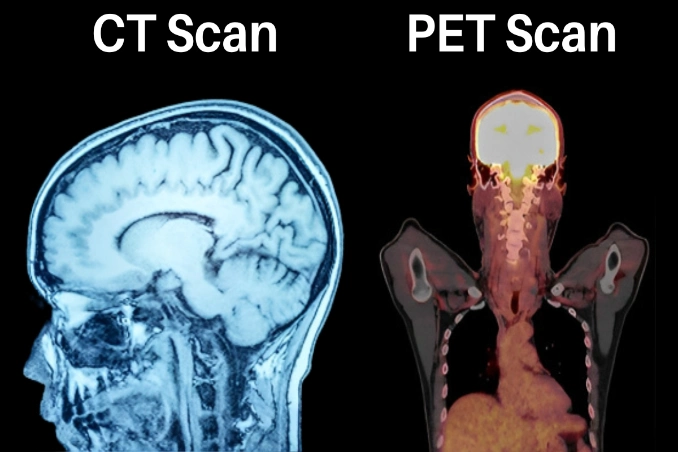
A CT scan focuses on the body’s structure. It shows the size, shape, and condition of organs, bones, blood vessels, and other tissues.
A PET-CT scan goes one step further. Along with structural images, it shows how cells inside the body are functioning by tracking their metabolic activity. This allows doctors to identify abnormal tissue even before visible structural changes appear in some cases.
A simple way to remember the difference is:
A CT scan shows what your body looks like, while a PET-CT scan shows what your body is doing.
That is why doctors choose one over the other depending on the medical condition they are investigating.
The Biggest Difference Explained with a Simple Example
Imagine looking at a city on your phone. A normal map shows you:
- Roads
- Buildings
- Bridges
- Landmarks
This is similar to a CT scan. It provides a detailed picture of your body’s structures.
Now imagine switching on live traffic.
You can instantly see:
- Roads with heavy traffic
- Areas where vehicles have stopped
- Unusual activity across the city
This is similar to a PET scan, which highlights areas where cells are using unusually high amounts of energy.
A PET-CT scan combines both views. Doctors can see exactly where abnormal cellular activity is happening and identify its precise location within the body. This combination is especially valuable for conditions like cancer, certain heart diseases, and some neurological disorders.
PET-CT vs CT Scan: Side-by-Side Comparison
|
Feature |
CT Scan |
PET-CT Scan |
|
Main purpose |
Examines body structure |
Examines both structure and cell activity |
|
Shows |
Bones, organs, blood vessels, injuries |
Active disease, cancer, inflammation, organ function |
|
Technology |
X-rays |
PET imaging combined with CT imaging |
|
Preparation |
May require fasting if contrast is used |
Usually requires 6 hours of fasting and blood sugar control |
|
Time taken |
Around 10–15 minutes |
Around 2–3 hours including tracer uptake time |
|
Best suited for |
Injuries, fractures, infections, kidney stones, emergency conditions |
Cancer diagnosis, staging, treatment monitoring, recurrence detection |
|
Cost |
Generally lower |
Higher due to specialised technology and radiotracer |
Neither scan is universally better. Each has its own purpose, and your doctor recommends the one that provides the most useful information for your condition.
What Does a CT Scan Show?
A CT scan gives doctors clear pictures of the inside of your body. It helps them examine your bones, organs, blood vessels, and other tissues in much greater detail than a regular X-ray. The scan is quick, which is why it is often used when doctors need answers without delay.
Doctors commonly recommend a CT scan for:
- Head injuries and brain bleeding
- Bone fractures and joint injuries
- Lung infections and chest problems
- Kidney stones
- Appendicitis and severe abdominal pain
- Problems affecting the liver, kidneys, or pancreas
- Internal bleeding after an accident
In many situations, a CT scan provides enough information for doctors to diagnose the problem and decide on the right treatment. Because it is fast, accurate, and widely available, it is one of the most commonly used imaging tests for both emergency and routine medical care.
What Does a PET-CT Scan Show?
A PET-CT scan does more than just take pictures of the inside of your body. It also helps doctors see how your organs and tissues are working. This can help identify problems that may not be clearly visible on a regular CT scan.
Before the scan, a small amount of a safe radioactive glucose tracer, commonly 18F-FDG, is injected into the bloodstream. Cells that are more active than normal absorb more of this tracer, making them easier to identify during imaging.
This makes PET-CT particularly valuable for:
- Detecting and staging many types of cancer
- Checking whether cancer has spread
- Evaluating how chemotherapy or radiation treatment is working
- Detecting cancer recurrence after treatment
- Identifying hidden infections or inflammation
- Assessing certain heart and brain disorders
One of the biggest advantages of a PET-CT scan is that it can sometimes detect disease at an earlier stage by showing unusual cell activity before visible changes appear on a CT scan. This helps doctors make more informed treatment decisions and plan the most appropriate care.
Can a PET-CT Scan Replace a CT Scan?
The simple answer is no.
Many people believe a PET-CT scan is a superior version of a CT scan that can replace it in every situation. In reality, both tests are designed for different purposes and often complement each other rather than compete.
For example:
- A person with a head injury or suspected fracture usually needs a CT scan because it quickly shows structural damage.
- A patient with newly diagnosed cancer may need a PET-CT scan to determine whether the disease has spread.
- In some cases, doctors recommend both scans to get a complete picture before planning treatment.
The right scan depends on the clinical question your doctor is trying to answer, not on which test is more advanced.
Which Scan Do Doctors Recommend for Different Conditions?
The table below shows common situations where each scan is typically preferred.
|
Medical Condition |
Recommended Scan |
Why? |
|
Road accident or trauma |
CT Scan |
Detects fractures, bleeding and organ injuries quickly |
|
Persistent severe headache |
CT Scan |
Helps identify bleeding or structural abnormalities |
|
Kidney stones |
CT Scan |
Clearly shows stones and urinary tract obstruction |
|
Appendicitis |
CT Scan |
Evaluates inflammation and abdominal organs |
|
Cancer diagnosis and staging |
PET-CT Scan |
Detects active cancer and spread throughout the body |
|
Cancer treatment monitoring |
PET-CT Scan |
Shows whether treatment is working |
|
Suspected cancer recurrence |
PET-CT Scan |
Detects active disease even before visible changes |
|
Unexplained weight loss or prolonged fever |
PET-CT Scan |
Helps identify hidden infection, inflammation or cancer |
|
Elevated PSA after prostate cancer treatment |
PSMA PET-CT |
Detects recurrent prostate cancer with high accuracy |
Your treating doctor will always choose the scan that provides the most meaningful information for your condition.
Is PET-CT More Accurate Than a CT Scan?
This is one of the most searched questions, but there isn’t a single answer.
A CT scan is more accurate for identifying structural problems such as fractures, internal bleeding, kidney stones and many emergency conditions.
A PET-CT scan is more accurate when doctors need to assess cellular activity, such as detecting active cancer, evaluating treatment response or identifying disease recurrence.
Rather than asking which scan is more accurate, it is better to ask which scan is more appropriate for your diagnosis.
Why Does a PET-CT Scan Cost More?
PET-CT scans involve more than simply taking pictures.
The higher cost is mainly due to:
- Special radioactive tracers such as 18F-FDG or PSMA
- Advanced PET and CT imaging combined in one machine
- Longer appointment duration
- Specialised nuclear medicine protocols
- Reporting by experienced radiologists and nuclear medicine experts
Although a PET-CT scan costs more than a routine CT scan, it often provides crucial information that helps doctors plan the right treatment while avoiding unnecessary tests.
How to Prepare for Your Scan
Proper preparation improves image quality and helps doctors make accurate diagnoses.
|
Preparation |
CT Scan |
PET-CT Scan |
|
Fasting |
May be required for contrast studies |
Usually 6 hours before the scan |
|
Water |
Usually allowed |
Usually allowed unless advised otherwise |
|
Medicines |
Continue unless instructed |
Inform the centre about diabetes medicines or insulin |
|
Blood Sugar |
Usually not an issue |
Should be well controlled for accurate results |
|
Metal Objects |
Remove before scanning |
Remove before scanning |
|
Arrival Time |
15–30 minutes early |
Around 60 minutes early for tracer preparation |
If you have diabetes, are pregnant, breastfeeding, or have kidney disease, always inform the diagnostic centre before your appointment.
Why Image Quality and Reporting Matter
Even the most advanced imaging technology cannot deliver reliable results without proper protocols and expert interpretation.
For PET-CT scans, factors such as correct patient preparation, blood sugar control, timely use of the radiotracer, scanner calibration and experienced reporting all influence the quality of the final images.
Similarly, a CT scan requires appropriate scanning protocols and careful interpretation to ensure small but clinically important findings are not overlooked.
That is why choosing an experienced diagnostic centre is just as important as choosing the right scan.
Why Patients Across Delhi NCR Choose Orbit Imaging
At Orbit Imaging, we understand that every scan plays an important role in your diagnosis and treatment journey. Whether you need a CT scan for a sudden medical concern or a PET-CT scan for cancer evaluation, we focus on delivering accurate imaging and dependable reporting.
Patients choose us because we offer:
- More than 21 years of trusted diagnostic experience
- Care for over 1 crore patients across Delhi NCR
- Advanced PET-CT and CT imaging technology
- Reports prepared by experienced MD & MBBS Radiologists
- NABL, NABH and QCI quality standards
- Transparent and affordable pricing
- Timely reports to support faster treatment decisions
Convenient Orbit Imaging Centres Across Delhi NCR
You can book your scan at the branch nearest to you:
- Karol Bagh – Central Delhi (Pusa Road area)
- Rohini – Prashant Vihar, Outer Ring Road
- Green Park – Yusuf Sarai, South Delhi
- Dwarka – Sector 7, near Ramphal Chowk
- Dilshad Garden – Main Road, East Delhi
- Gurugram – Sector 52, near Artemis Hospital
Our multiple locations make it easier for patients across Delhi NCR to access high-quality PET-CT and CT scan services without travelling long distances.
Frequently Asked Questions
Can a CT scan detect cancer?
A CT scan can identify suspicious lumps or tumours, but it cannot always determine whether they are active cancer. A PET-CT scan may be recommended for further evaluation.
Is a PET-CT scan painful?
No. The scan is painless. You may only feel a small pinprick when the tracer is injected.
Why do I need to fast before a PET-CT scan?
Fasting helps the radioactive glucose tracer distribute properly. High blood sugar can reduce image quality and affect the accuracy of the scan.
How long does a PET-CT scan take?
Although the scan itself usually takes around 20 minutes, you should expect to spend approximately 2–3 hours at the centre, including the tracer uptake period.
Do I need both a CT scan and a PET-CT scan?
Not always. Some patients only require a CT scan, while others benefit from a PET-CT scan. In certain situations, doctors recommend both tests because they provide different but complementary information.
Still Not Sure Which Scan You Need?
If you’re unsure whether your doctor has recommended a CT scan or a PET-CT scan, let our experts help. Choosing the right scan is important for an accurate diagnosis, and our experienced team can review your prescription, explain the purpose of the test, and guide you through the preparation process.
At Orbit Imaging, we combine advanced CT and PET-CT technology with experienced radiologists to deliver accurate, reliable reports you can trust. With conveniently located centres in Karol Bagh, Rohini, Green Park, Dwarka, Dilshad Garden, and Gurugram, quality diagnostic care is always within reach.
Book your CT or PET-CT scan at Orbit Imaging today, or contact our team for expert guidance before your appointment. We’re here to help you take the next step with confidence.

4.2 Stars on Google Maps (900+ Reviews)
Free Consultation for your test
Reliable and Affordable diagnostics
NABL, NABH, and QCI-accredited
Crisp Imaging & Justified Pricing
22 Years of Trust & Care
Fill the form & leave it on us!
22+
Years in Diagnostics
1 Cr+
Patients Served
450+
Tests & Scans Available
200+
Radiologists & Technicians
Orbit Imaging & Pathlab–Rohini
Address: First Floor, A-1/5, A Block, Prashant Vihar, Sector 14, Rohini, Delhi, 110085, M: 9289289216
Why Choose Orbit Imaging!
22 Years of Trust & Care
MD & MBBS Radiologists
Lowest Rates in Delhi NCR
Recommended by Leading Doctors
1 Cr+ Patients Served
Cardiology Tests at Orbit Imaging
ECHO
ECG
CT ANGIOGRAPHY
CARDIAC MRI
Radiology Tests at Orbit Imaging
MRI
CT SCAN
ULTRASOUND
PET CT SCAN
MAMMOGRAPHY
BONE DEXA
PFT
Pathology Tests at Orbit Imaging
Neurology Tests at Orbit Imaging
Orbit Imaging & Pathlab
Best Diagnostic Lab with Affordable Rates in Rohini