
PET CT Scan vs MRI Scan: Difference, Uses, Which Test Is Better & When Should You Choose Each?
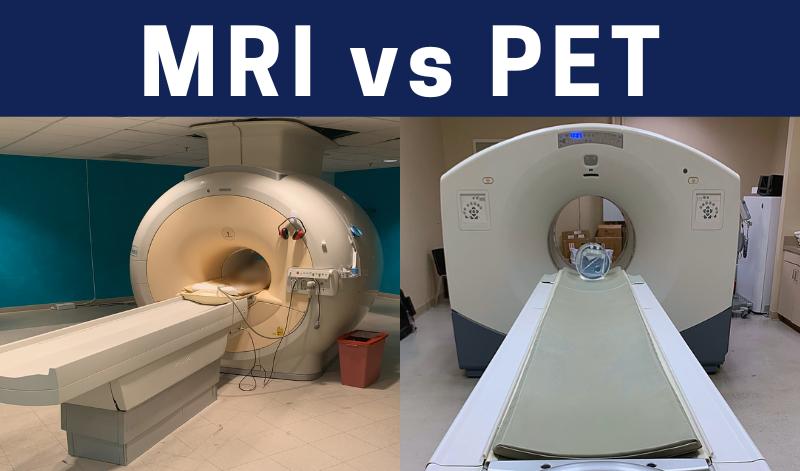
The biggest difference is simple: an MRI scan shows detailed body structures, while a PET CT scan shows how your cells and organs are functioning.
This is why many people feel confused when their doctor recommends one of these scans. Whether you’re being evaluated for cancer, persistent pain, a neurological condition, or another health concern, it’s not always clear why one scan is preferred over the other or whether you need both.
In this guide, we’ll explain the difference between PET CT and MRI scans, when each test is recommended, their advantages and limitations, and where you can book the right scan at Orbit Imaging across Delhi-NCR.
PET CT Scan vs MRI Scan: Quick Comparison
|
Feature |
PET CT Scan |
MRI Scan |
|
Primary Purpose |
Shows how your organs and cells are working |
Shows detailed pictures of your body’s internal structures |
|
Technology Used |
Combines PET imaging with a CT scan |
Uses strong magnets and radio waves |
|
Radiation |
Uses a small amount of radioactive tracer along with CT radiation |
No radiation |
|
Best For |
Detecting cancer, checking if it has spread or returned, monitoring treatment, and identifying certain infections or inflammation |
Brain disorders, spine problems, joint pain, ligament injuries, muscle and soft tissue conditions |
|
What It Shows Best |
How active or abnormal your cells are |
The size, shape, and condition of organs, tissues, and bones |
|
Scan Duration |
About 2–3 hours, including preparation and waiting time |
Usually 20–60 minutes |
|
Preparation |
Fast for 4–6 hours before the scan |
Usually no special preparation; you’ll need to remove metal objects |
|
Contrast |
A special FDG tracer is usually given before the scan |
Contrast may be used if your doctor needs more detailed images |
|
Pregnancy |
Usually avoided unless there is a strong medical need |
May be performed in certain situations after your doctor’s advice |
|
Typical Cost |
Usually costs more because it is a highly specialised scan |
Generally costs less than a PET CT scan |
PET CT Scan vs MRI Scan: What's the Main Difference?
The easiest way to understand the difference is this: an MRI scan shows what your body looks like, while a PET CT scan shows what is happening inside your body.
An MRI gives clear, detailed pictures of your brain, spine, joints, muscles, and other organs. It helps doctors find injuries, swelling, tears, or other changes in these areas.
A PET CT scan looks at how your body’s cells are behaving. It can help doctors find diseases like cancer, check if cancer has spread, see how treatment is working, or detect certain infections and inflammation.
Both scans have different roles, so one is not better than the other. The right choice depends on what your doctor needs to find, and in some cases, both scans may be recommended for a clearer diagnosis.
Understanding PET CT Scan
A PET CT scan combines PET and CT imaging to show both where a problem is located and how active it is. Before the scan, a small amount of safe FDG tracer is injected. Areas with higher activity, such as many cancers, infections, or inflammation, absorb more of the tracer and appear clearly on the scan.
Doctors commonly recommend a PET CT scan for:
- Cancer detection and staging
- Checking if cancer has spread (metastasis)
- Detecting cancer recurrence
- Monitoring response to chemotherapy or radiation therapy
- Lymphoma, lung cancer, and breast cancer evaluation
- PSMA PET CT for prostate cancer
- Detecting certain infections and inflammatory conditions
One of the biggest advantages of a PET CT scan is that it can assess the entire body in a single examination, making it especially valuable for cancer diagnosis and treatment planning.
Understanding MRI Scan
An MRI (Magnetic Resonance Imaging) scan uses strong magnets and radio waves to create detailed images of the inside of your body without using radiation. It is the preferred scan when doctors need a closer look at the brain, spine, joints, muscles, ligaments, and other soft tissues.
An MRI scan is commonly recommended for:
- Brain disorders and stroke
- Brain tumours
- Multiple sclerosis
- Slipped discs and spine problems
- Neck and back pain
- Knee, shoulder, and sports injuries
- Joint and ligament injuries
- Pelvic and liver imaging
- Soft tissue tumours
MRI is often the first choice for diagnosing neurological conditions, joint injuries, and many soft tissue problems because of the clear, detailed images it provides.
Which Scan Do You Need? A Quick Decision Guide
|
If your doctor suspects… |
Usually Recommended |
|
Cancer staging |
PET CT Scan |
|
Cancer recurrence |
PET CT Scan |
|
Whole-body cancer spread |
PET CT Scan |
|
Treatment response |
PET CT Scan |
|
Prostate cancer staging |
PSMA PET CT |
|
Brain stroke |
MRI Scan |
|
Brain tumour evaluation |
MRI ± PET CT |
|
Slip disc |
MRI Scan |
|
Knee ligament injury |
MRI Scan |
|
Spine disorders |
MRI Scan |
|
Liver lesion characterisation |
MRI (sometimes combined with PET CT) |
This table provides general guidance, but your specialist will recommend the scan that best answers your specific clinical question.
PET CT vs MRI for Different Health Conditions
Cancer
For cancer, PET CT is often the preferred investigation because it identifies active cancer cells throughout the body. MRI, however, remains invaluable when doctors need detailed anatomical information, especially for brain, liver, pelvic or soft tissue tumours.
Brain Disorders
MRI is the gold standard for evaluating strokes, brain tumours, epilepsy, multiple sclerosis and many neurological conditions because it produces highly detailed brain images. PET CT may sometimes be used to assess brain metabolism in selected neurological disorders.
Spine Problems
MRI is significantly better for slipped discs, spinal cord disorders, nerve compression and chronic back pain because it visualises discs, nerves and surrounding soft tissues clearly. PET CT has only a limited role unless cancer involvement is suspected.
Joint and Sports Injuries
MRI is the preferred choice for ligament tears, tendon injuries, cartilage damage, rotator cuff injuries and meniscus tears. PET CT is generally not used for routine orthopaedic injuries.
Infection and Inflammation
PET CT can identify hidden infections or inflammatory diseases affecting multiple parts of the body, while MRI provides excellent local detail when doctors need to assess a specific organ or joint.
Can PET CT and MRI Be Needed Together?
Yes. In some cases, doctors may recommend both scans because each provides different information.
For example:
- Brain tumours: MRI shows the tumour in detail, while PET CT checks how active it is.
- Pelvic cancers: MRI looks at the affected area, while PET CT checks if the disease has spread.
- Liver lesions: MRI helps examine the lesion closely, and PET CT may be used if cancer spread is suspected.
Using both scans together gives doctors a more complete picture and helps them plan the most appropriate treatment.
PET CT vs MRI: Advantages and Limitations
|
PET CT Scan |
MRI Scan |
|
Excellent for cancer detection and staging |
Outstanding soft tissue detail |
|
Detects disease activity before structural changes appear |
No radiation exposure |
|
Whole-body evaluation in one scan |
Ideal for brain, spine and joints |
|
Useful for monitoring cancer treatment |
Superior anatomical resolution |
|
Uses radiation and requires fasting |
Longer time inside the scanner may cause discomfort for some patients |
Neither scan is universally “better.” Each excels in different clinical situations.
Preparing for Your Scan
PET CT Preparation
To ensure accurate results, proper preparation is essential.
- Fast for 4–6 hours before your appointment.
- Drink plenty of plain water unless advised otherwise.
- Avoid sugary foods and drinks before the examination.
- Avoid strenuous exercise for 24 hours before the scan.
- Inform us if you have diabetes so we can provide customised preparation instructions.
- Bring previous imaging studies and medical reports for comparison.
These steps help ensure the tracer is absorbed correctly, allowing doctors to interpret your scan with greater confidence.
MRI Preparation
MRI preparation is usually straightforward.
Before your scan:
- Remove all jewellery and metallic objects.
- Inform us if you have a pacemaker, cochlear implant, aneurysm clips or other implanted medical devices.
- Tell our team if you are pregnant or think you may be pregnant.
- Inform us if you experience claustrophobia so appropriate support can be arranged.
- Bring previous reports and prescriptions whenever available.
Why Choose Orbit Imaging for PET CT and MRI?
Choosing the right diagnostic centre matters as much as choosing the right scan. If you are looking for a PET CT scan centre in Delhi or an MRI scan centre in Delhi, Orbit Imaging offers both services with accurate reporting and patient-focused care.
Our PET CT Scan (including PSMA PET CT) is available at our Rohini branch, designed for advanced cancer and whole-body imaging.
Our MRI scan services are available across Delhi-NCR at:
- Karol Bagh / Pusa Road
- Rohini
- Paschim Vihar
- Dwarka
- Green Park / Yusuf Sarai
- Gurugram
Why patients choose Orbit Imaging:
- 21+ years of diagnostic experience
- PET CT and MRI under one trusted network
- Senior MD radiologist reporting
- NABL & NABH accredited standards
- Modern imaging technology
- Easy appointments and fast scheduling
- Trusted by 1 crore+ patients
Whether you need a PET CT scan for cancer evaluation or an MRI scan for brain, spine, or joint problems, we ensure accurate results with reliable care across Delhi-NCR.
Final Thoughts
If you’re stuck choosing between a PET CT and an MRI, don’t worry—you don’t have to figure it out alone. The simple rule is: MRI shows structure, PET CT shows activity.
At Orbit Imaging, we help you turn that confusion into clarity. You just share your prescription, and we guide you to the right scan, right centre, and right time without delays or guesswork.
Think of it like this—you bring the question, we help you find the answer.
From MRI scan centres in Delhi-NCR to a dedicated PET CT scan centre in Delhi (Rohini), everything is set up so you don’t waste time running around.
Upload your prescription
Get the right scan guidance
Book your slot at the nearest Orbit Imaging centre
Simple, fast, and clear—just the way medical decisions should be.
FAQs
Is PET CT safe for repeated scans?
Yes. PET CT can be repeated when required, especially during cancer follow-ups. Doctors only suggest it when the clinical benefit is higher than the small radiation exposure.
Why do I need to fast before a PET CT scan?
Fasting ensures accurate results because food (especially sugar) can interfere with how the tracer is absorbed by cells, making the scan less precise.
Can MRI be done if I have metal in my body?
It depends on the type of implant. Some are MRI-safe, but others like certain pacemakers or metal clips may not be allowed. We always check safety before the scan.
Which scan gives faster results: PET CT or MRI?
MRI is usually completed faster, but PET CT reporting may take longer because doctors carefully analyse whole-body metabolic activity in detail.
Can PET CT detect disease even before symptoms appear?
Yes. In some cases, PET CT can detect abnormal activity early, even before clear symptoms develop, which is why it is often used in cancer evaluation and monitoring.

4.2 Stars on Google Maps (900+ Reviews)
Free Consultation for your test
Reliable and Affordable diagnostics
NABL, NABH, and QCI-accredited
Crisp Imaging & Justified Pricing
22 Years of Trust & Care
Fill the form & leave it on us!
22+
Years in Diagnostics
1 Cr+
Patients Served
450+
Tests & Scans Available
200+
Radiologists & Technicians
Orbit Imaging & Pathlab–Rohini
Address: First Floor, A-1/5, A Block, Prashant Vihar, Sector 14, Rohini, Delhi, 110085, M: 9289289216
Why Choose Orbit Imaging!
22 Years of Trust & Care
MD & MBBS Radiologists
Lowest Rates in Delhi NCR
Recommended by Leading Doctors
1 Cr+ Patients Served
Cardiology Tests at Orbit Imaging
ECHO
ECG
CT ANGIOGRAPHY
CARDIAC MRI
Radiology Tests at Orbit Imaging
MRI
CT SCAN
ULTRASOUND
PET CT SCAN
MAMMOGRAPHY
BONE DEXA
PFT
Pathology Tests at Orbit Imaging
Neurology Tests at Orbit Imaging
Orbit Imaging & Pathlab
Best Diagnostic Lab with Affordable Rates in Rohini