
First Test for Heart Problems: ECG Explained
You might be sitting at work when your heart suddenly starts racing, feel unusually breathless while climbing a flight of stairs, or notice a heaviness in your chest that doesn’t feel normal. Symptoms like these do not always mean you have a serious heart condition, but they are signs that deserve attention rather than guesswork.
Because heart-related symptoms can have many possible causes, doctors often begin with an ECG (Electrocardiogram). It is one of the fastest and most reliable ways to get an initial picture of how your heart is functioning and whether further evaluation may be needed.
If your doctor has advised an ECG, or you are looking for information about heart tests, this guide will explain what an ECG is, how it works, what it can detect, and why it remains the most common first test for heart problems.
What Is an ECG Test?
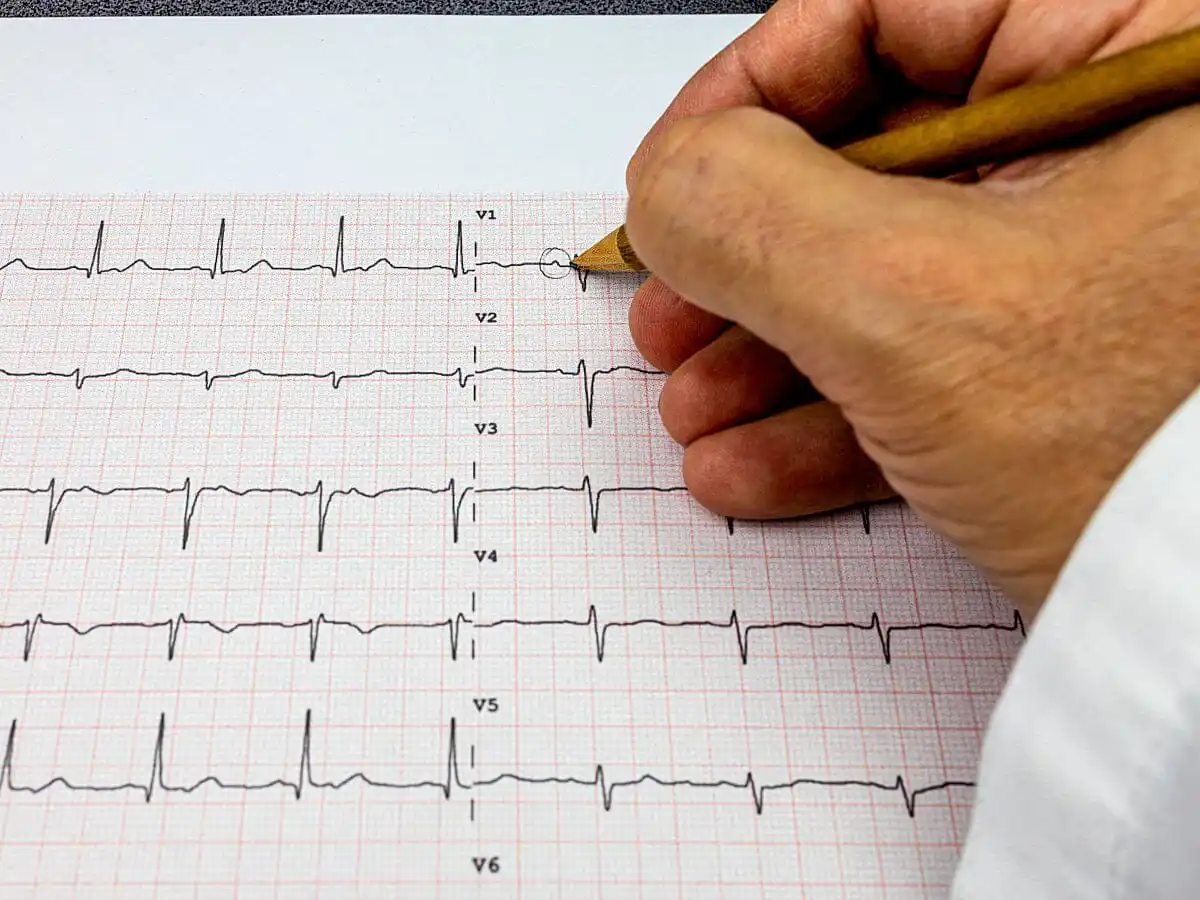
Your heart beats through tiny electrical signals that keep it pumping blood throughout your body. An ECG records these signals and shows whether your heartbeat is normal or if there are signs that need further attention.
Think of it as a quick snapshot of your heart’s activity. In just a few minutes, it can help doctors identify rhythm problems, signs of a heart attack, or other changes that may be affecting your heart health.
Quick Facts About an ECG
- Completely painless and non-invasive
- No injections, needles, or cuts
- No radiation exposure
- The machine only records your heart’s signals; it does not send electricity into your body
- Usually completed in less than 10 minutes
Because it is fast, safe, and informative, an ECG remains one of the most commonly used first tests for evaluating heart-related symptoms.
Why Do Doctors Recommend an ECG First?
Fast Results
An ECG is one of the quickest heart tests available. The test itself takes only a few minutes, and doctors can review the results almost immediately to understand whether further evaluation is needed.
Affordable and Accessible
An ECG is widely available and relatively affordable, making it a practical first step for both routine heart check-ups and urgent situations.
Helps Detect Serious Problems Early
An ECG can help identify signs of a heart attack, irregular heart rhythms, and other heart-related abnormalities that may require prompt medical attention.
Provides a Useful Baseline
Even when the results are normal, an ECG creates a record of your heart’s activity. If you need another ECG in the future, doctors can compare the reports to look for any changes over time.
Symptoms That May Require an ECG
Common symptoms include:
- Chest pain or chest pressure
- Heart palpitations
- Rapid heartbeat
- Irregular heartbeat
- Shortness of breath
- Unexplained fatigue
- Dizziness or lightheadedness
- Fainting episodes
- High blood pressure
- Swelling in the legs
- Family history of heart disease
Many people assume heart problems always cause severe chest pain. In reality, symptoms can be much more subtle.
For example, some people experience only breathlessness while climbing stairs. Others notice a fluttering sensation in their chest or occasional dizziness. These seemingly minor symptoms may warrant further evaluation, especially when they occur repeatedly.
How Does an ECG Work?
Step 1: Preparation
You will be asked to lie comfortably on an examination table. Wearing loose-fitting clothing can make the process easier, as the technician will need access to your chest, wrists, and ankles.
Step 2: Electrode Placement
The technician places small adhesive patches, called electrodes, on your chest, arms, and legs. These sensors record your heart’s natural electrical signals.
Step 3: Signal Recording
The electrodes are connected to the ECG machine using wires. You simply lie still and breathe normally while the machine records your heartbeat, which usually takes less than a minute.
Step 4: Report Generation
The ECG machine creates a graph of your heart’s activity. A qualified doctor then reviews the report and interprets the findings based on your symptoms and medical history.
What You Will Not Experience
- No pain
- No injections
- No electric shocks
- No radiation exposure
If you have significant chest hair, the technician may remove a few small patches of hair to improve sensor contact and ensure an accurate reading.
Different Types of ECG Tests
Resting ECG
This is the most common ECG test.
You lie still while the machine records your heart’s electrical activity. It is often used for routine heart evaluations and symptom assessments.
Stress ECG (Treadmill Test)
Some heart problems only become noticeable when the heart works harder.
During a stress ECG, your heart activity is monitored while you walk on a treadmill. This helps identify issues that may not appear during rest.
Holter Monitoring
Heart rhythm abnormalities do not always occur during a short ECG recording.
A Holter monitor is a portable ECG device worn for 24 to 48 hours. It continuously records your heart rhythm while you go about your daily routine.
Heart Conditions an ECG Can Help Identify
Arrhythmias
Arrhythmias occur when the heart beats too fast, too slow, or irregularly. An ECG is one of the most effective tools for identifying these rhythm disturbances.
Heart Attack
An ECG can reveal characteristic changes that suggest an active heart attack or previous heart muscle damage.
Conduction Abnormalities
The heart’s electrical system relies on precise pathways. When signals become delayed or blocked, an ECG can often detect these abnormalities.
Enlarged Heart Chambers
Long-standing high blood pressure and certain heart diseases can cause enlargement of the heart chambers, which may produce detectable ECG changes.
Reduced Blood Flow to the Heart
Changes in ECG wave patterns can indicate that the heart muscle may not be receiving adequate oxygen-rich blood.
Can an ECG Detect Every Heart Problem?
An ECG is an excellent first heart test, but it is not a complete evaluation of every possible cardiac condition.
A standard ECG records only a brief snapshot of your heart’s activity. If symptoms occur intermittently or if a structural problem exists without affecting electrical activity, the ECG may appear normal.
That is why doctors often combine ECG findings with your symptoms, medical history, physical examination, and additional tests when necessary.
Additional cardiac investigations may include:
- 2D Echocardiography (Echo)
- Treadmill Test (TMT)
- Holter Monitoring
- Cardiac Blood Tests
- CT Coronary Angiography
Rather than viewing a normal ECG as the final answer, it should be considered an important first step in the diagnostic process.
ECG vs Echo vs TMT: What's the Difference?
Many patients hear these terms and assume they are interchangeable. In reality, each test answers a different clinical question.
| Test | What It Evaluates | Common Purpose |
| ECG | Electrical activity of the heart | Rhythm problems, chest pain, heart attack assessment |
| 2D Echo | Heart structure and function | Valve disorders, pumping strength, and chamber size |
| TMT | Heart response during exercise | Exercise-induced symptoms and hidden blockages |
| CT Coronary Angiography | Coronary artery anatomy | Detecting arterial narrowing or blockages |
These tests often complement one another rather than replace each other.
Need an ECG Test in Delhi NCR?
With advanced diagnostic technology, experienced medical professionals, and over 21 years of trusted service, we help you access timely heart evaluations with confidence.
Why Delhiites Trust Orbit Imaging & Pathlab
- 15 branches across Delhi NCR
- 1 Crore+ patients served
- Advanced imaging facilities
- Qualified doctors and radiologists
- Crisp and sharp scan images
- 21+ years of diagnostic excellence
Comprehensive Cardiac Testing Services
Our cardiac services include:
- ECG (Electrocardiogram)
- 2D Echo
- TMT (Treadmill Test)
- Holter Monitoring
- Blood Pressure Monitoring
- Cardiac Blood Tests
- Advanced cardiac imaging services
This integrated approach helps ensure continuity in your diagnostic journey if additional testing becomes necessary.
Visit Our Centres
ECG Test Centre in Karol Bagh
If you are looking for a trusted centre for an ECG in Karol Bagh, our facility offers convenient access, experienced professionals, and dependable cardiac diagnostics designed around patient comfort and accuracy.
ECG Test Centre in Gurugram
For patients seeking an ECG in Gurugram, our centre provides advanced diagnostic infrastructure, experienced specialists, and streamlined appointment scheduling for a smooth healthcare experience.
Book Your ECG Test Today
If you have been advised to undergo an ECG test or want a preventive heart check-up, we invite you to visit Orbit Imaging & Pathlab. With experienced professionals, advanced technology, and a strong reputation built over 21 years, we are committed to helping you take the next step toward better heart health.
Contact our team today to schedule your ECG or comprehensive cardiac screening at our Karol Bagh or Gurugram centres.
Frequently Asked Questions About ECG
Is an ECG painful?
No. The test is completely painless and non-invasive.
How long does an ECG take?
Most ECG tests are completed within 5 to 10 minutes.
Do I need to fast before an ECG?
No fasting is usually required for a standard ECG.
Can an ECG detect blocked arteries?
An ECG can show indirect signs of reduced blood flow or a heart attack, but it cannot always identify the exact location or severity of an artery blockage.
Is an ECG safe for older adults?
Yes. ECG testing is safe for people of all age groups, including senior citizens.
Can anxiety affect ECG results?
Anxiety may temporarily increase your heart rate, but experienced doctors can usually distinguish anxiety-related changes from significant cardiac abnormalities.

Free Consultation for your test
Reliable and Affordable diagnostics
NABL, NABH, and QCI-accredited
Crisp Imaging & Justified Pricing
22 Years of Trust & Care
Fill the form & leave it on us!
22+
Years in Diagnostics
1 Cr+
Patients Served
450+
Tests & Scans Available
200+
Radiologists & Technicians