
CT Angiography vs Conventional Angiography: What Patients Should Know
CT Angiography (CTA) and Conventional Angiography are two imaging techniques used to examine blood vessels and detect conditions such as blockages, narrowing, aneurysms, and other vascular abnormalities. While both provide valuable diagnostic information, they differ significantly in terms of procedure, invasiveness, recovery time, and clinical applications.
CT Angiography is a non-invasive imaging test that uses advanced CT technology and contrast dye to create detailed images of blood vessels. Conventional Angiography, on the other hand, involves inserting a catheter into an artery and may also allow treatment during the same procedure.
Understanding the differences between these two approaches can help patients know what to expect and why a doctor may recommend one over the other. In this guide, we compare CT Angiography vs Conventional Angiography, including their benefits, limitations, and when each test may be appropriate.
What Is an Angiography?
Angiography is a medical imaging technique used to visualise blood vessels and evaluate how blood flows through your arteries and veins. Doctors use it to detect narrowing, blockages, aneurysms, blood clots, and other vascular abnormalities.
Today, there are two primary ways to perform angiography:
- CT Angiography (CTA) – a non-invasive imaging scan.
- Conventional Angiography – an invasive catheter-based procedure.
While both methods can provide detailed information about your blood vessels, they differ significantly in terms of procedure, recovery, risks, and purpose.
CT Angiography vs Conventional Angiography: At a Glance
| Feature | CT Angiography (CTA) | Conventional Angiography |
|---|---|---|
| Procedure Type | Non-invasive imaging scan | Invasive catheter procedure |
| How It Works | Contrast dye through a vein followed by CT imaging | Catheter inserted into an artery |
| Procedure Duration | Usually 10–30 minutes | Typically 30–90 minutes |
| Hospital Stay | Outpatient procedure | Observation or a short hospital stay may be required |
| Recovery Time | Minimal | Several hours a day |
| Risk Level | Lower | Higher due to arterial access |
| Diagnostic Accuracy | Excellent for vascular assessment | Gold standard for detailed vessel imaging |
| Treatment Capability | Diagnostic only | Diagnostic and therapeutic |
| Cost | Generally lower | Generally higher |
For many patients, the most important difference is simple: CT Angiography helps doctors diagnose vascular problems without placing a catheter inside an artery.
What Happens During a CT Angiography?
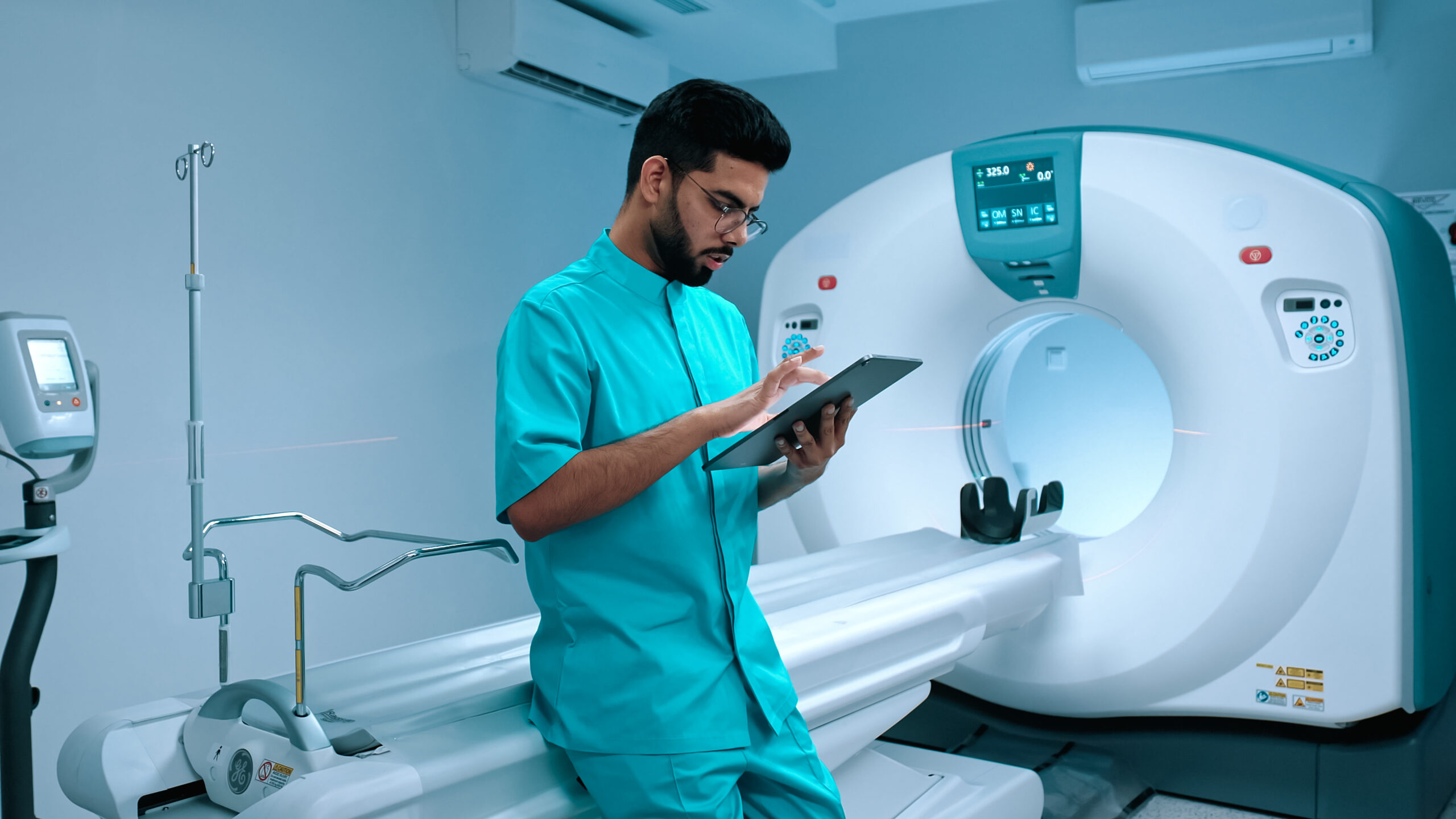
CT Angiography combines advanced CT scanning technology with a contrast dye to create highly detailed images of blood vessels throughout the body.
During the examination, a technician inserts a small IV line into a vein, usually in your arm. The contrast dye is injected through this IV while the CT scanner captures rapid, high-resolution images.
From a patient’s perspective, the experience is typically straightforward:
- A brief needle prick as a small IV line is placed in your arm.
- A sudden, temporary warm flush through your body when the contrast dye enters (this is completely normal and usually passes within seconds).
- The quiet whirring sound of the CT scanner as it captures detailed images of your blood vessels.
- No surgical incisions or stitches.
- No arterial catheter insertion in most cases.
- Minimal downtime, allowing most patients to return to normal activities shortly after the scan.
Most patients are surprised by how quickly the procedure is completed. In many cases, you can return to normal daily activities shortly after the scan.
Why CT Angiography Has Become a Preferred Diagnostic Tool
One of the biggest shifts in cardiovascular and vascular diagnostics over the last two decades has been the growing use of CT Angiography as a first-line investigation.
The reason is simple: doctors can often obtain exceptionally detailed vascular information without exposing patients to the risks associated with invasive procedures.
1. Non-Invasive and More Comfortable
Unlike traditional angiography, CT Angiography does not require a catheter to be threaded through an artery. For most patients, this means:
- Less anxiety
- Greater comfort
- Faster appointments
- Fewer procedural complications
This is especially valuable for patients undergoing evaluation rather than treatment.
2. Faster Diagnosis
Time matters when investigating heart disease, stroke risk, or vascular abnormalities. Because CTA scans can be completed quickly, doctors often receive critical information sooner, helping them make faster treatment decisions.
3. Lower Risk Profile
Any procedure involving arterial catheterisation carries certain risks, including:
- Bleeding
- Infection
- Arterial injury
- Blood vessel damage
CT Angiography significantly reduces these concerns because no arterial access is required.
4. Exceptional Image Quality
Modern CT technology provides remarkable visualisation of blood vessels and surrounding anatomy. CTA is commonly used to evaluate:
- Coronary arteries of the heart
- Brain blood vessels
- Neck arteries
- Aorta
- Pulmonary arteries
- Renal arteries
- Peripheral arteries in the legs and arms
These detailed images help doctors detect disease earlier and plan treatment more effectively.
When Your Doctor May Recommend CT Angiography
CT Angiography is often recommended when physicians need a detailed map of the vascular system without immediately performing an invasive procedure.
You may be advised to undergo CTA for:
- Suspected coronary artery disease
- Unexplained chest pain
- Detection of arterial blockages
- Aneurysm screening
- Stroke risk assessment
- Peripheral artery disease
- Pulmonary embolism evaluation
- Pre-surgical planning
- Follow-up after vascular treatment
In many situations, CTA serves as an excellent first step because it provides extensive diagnostic information while minimising patient discomfort.
When Conventional Angiography Is Still Necessary
Although CT Angiography has transformed vascular diagnostics, conventional angiography continues to play a vital role in modern medicine.
In fact, there are situations where it remains the preferred option.
Immediate Treatment Is Required
Conventional angiography allows doctors to diagnose and treat a problem during the same procedure.
For example, if a severe coronary blockage is discovered, a cardiologist may immediately perform:
- Angioplasty
- Stent placement
- Other vascular interventions
CT Angiography cannot provide treatment. It is a diagnostic test only.
Complex Vascular Conditions
Certain intricate vascular disorders require the extremely detailed real-time visualisation that conventional angiography provides.
Confirmation of Findings
Occasionally, CTA findings may require further evaluation through conventional angiography before treatment decisions are finalised.
This is why the two procedures should not be viewed as competitors. Instead, they are complementary tools used for different clinical purposes.
What Should You Expect Before a CT Angiography?
Preparing for a CT Angiography is usually simple. Your healthcare provider may advise you to:
- Fast for several hours before the scan
- Stay well hydrated
- Inform the team about allergies
- Discuss the kidney disease or diabetes history
- Share details about medications you are taking
- Remove metal accessories before the examination
Following these instructions helps ensure optimal image quality and patient safety.
Is CT Angiography Safe?
For the vast majority of patients, CT Angiography is considered a safe and well-tolerated procedure. However, you should always inform your healthcare provider if you:
- Whether you are pregnant or suspect you might be
- Have kidney disease
- Have previously experienced a contrast dye reaction
- Take medications that may interact with contrast agents
An experienced radiology team will review your medical history and determine the safest approach for your individual situation.
Why Image Quality and Radiologist Expertise Matter
Many patients focus only on the type of scan being performed. What often gets overlooked is that the accuracy of a CT Angiography depends heavily on two factors:
- The quality of the CT scanner.
- The expertise of the radiologist interpreting the images.
Even the most advanced vascular study is only as valuable as the quality of the images produced and the accuracy of the final interpretation.
That is why choosing an experienced diagnostic centre is just as important as choosing the right test.
Why Patients Across Delhi and Gurugram Choose Orbit Imaging & Pathlab for CT Angiography
When you need a CT Angiography, you want more than just a scan. You want confidence that the images are accurate, the reporting is reliable, and the entire process is smooth from start to finish. At Orbit Imaging & Pathlab, we have built that trust over more than 21 years of diagnostic excellence. Our commitment to quality is reflected in:
- NABL, NABH, and QCI-accredited diagnostic facilities
- Experienced MD and MBBS Radiologists
- Advanced high-resolution CT imaging technology
- Competitive and transparent pricing
- Convenient outpatient appointments
- More than 1 Crore patients served across Delhi NCR
Because vascular imaging requires exceptional precision, we invest in advanced diagnostic systems that deliver crisp, detailed images capable of identifying even subtle vascular abnormalities.
Convenient CT Angiography Centres Across Delhi NCR
We understand that healthcare should be accessible. That is why Orbit Imaging & Pathlab operates across major locations in Delhi NCR, including:
With multiple centres and easy appointment scheduling, advanced vascular imaging is never far from where you live or work.
Frequently Asked Questions
Who should undergo CT Angiography?
CT Angiography is often recommended for patients with symptoms or risk factors related to heart and vascular diseases. Your doctor will determine if it is the most suitable imaging test for your condition.
Do I need to fast before a CT Angiography scan?
Some CT Angiography examinations may require fasting for a few hours before the procedure. Your healthcare provider will give specific preparation instructions based on the area being examined.
What happens after the scan?
Most patients can resume their normal activities shortly after the examination. Drinking plenty of fluids is usually advised to help flush the contrast dye from the body.
Can patients with kidney problems undergo CT Angiography?
Patients with kidney disease should inform their doctor before the scan. Additional precautions or alternative imaging options may be considered depending on kidney function.
Are there any side effects from the contrast dye?
Most patients tolerate contrast dye well, though some may experience a brief warm sensation or metallic taste. Serious reactions are uncommon and are carefully monitored by medical professionals.
The Bottom Line
If your goal is to diagnose a vascular condition quickly, safely, and with minimal disruption to your daily life, CT Angiography is often the preferred first step. It offers detailed vascular imaging, shorter procedure times, lower risk, and virtually no recovery period compared with conventional angiography.
Conventional angiography still plays a crucial role when treatment needs to happen immediately, but for many patients, CT Angiography provides the answers doctors need without the invasiveness of a catheter-based procedure.
At Orbit Imaging & Pathlab, we combine advanced CT technology, experienced radiologists, nationally accredited quality standards, and affordable pricing to provide trusted CT Angiography services across Delhi and Gurugram. Whether you are evaluating chest pain, investigating vascular symptoms, or seeking preventive cardiovascular screening, our team is committed to delivering accurate answers with the care and precision your health deserves.

4.2 Stars on Google Maps (900+ Reviews)
Free Consultation for your test
Reliable and Affordable diagnostics
NABL, NABH, and QCI-accredited
Crisp Imaging & Justified Pricing
22 Years of Trust & Care
Fill the form & leave it on us!
22+
Years in Diagnostics
1 Cr+
Patients Served
450+
Tests & Scans Available
200+
Radiologists & Technicians
Orbit Imaging & Pathlab–Karol Bagh
Address: B-35, Block-11, Pusa Road, opp. Metro Pillar No 124, Old Rajinder Nagar, Delhi-110005, M: 9289289216
Why Choose Orbit Imaging!
22 Years of Trust & Care
MD & MBBS Radiologists
Lowest Rates in Delhi NCR
Recommended by Leading Doctors
1 Cr+ Patients Served
Cardiology Tests at Orbit Imaging–Karol Bagh
ECHO
ECG
CT ANGIOGRAPHY
CARDIAC MRI
Radiology Tests at Orbit Imaging–Karol Bagh
MRI
CT SCAN
ULTRASOUND
PET CT SCAN
MAMMOGRAPHY
BONE DEXA
PFT
Pathology Tests at Orbit Imaging–Karol Bagh
Neurology Tests at Orbit Imaging–Karol Bagh
Orbit Imaging & Pathlab
Best Diagnostic Lab with Affordable Rates in Karol Bagh